

Mikkeli believes in the circular economy of municipal water: it has excavated a test cave near the city’s new water treatment plant, where both companies and researchers can carry out research using the city’s wastewater. This test environment will be used to seek new solutions to the shortage of clean freshwater and the recovery of nutrients from wastewater.
Water shortages in southern Europe have been the subject of numerous headlines, and the lack of clean freshwater has become an increasingly topical issue around the world. Meanwhile, Finland is tackling the challenge of recovering nutrients, such as nitrogen and phosphorus, from its wastewaters. But what role does Mikkeli, a medium-sized city in South Savo, have to play in solving these global problems?
A few years ago, Mikkeli was facing a once-in-half-a-century project: the renovation of the city’s wastewater infrastructure.
The previous treatment plant, which was constructed in the 60s, was long past its prime. This presented Mikkeli with a unique possibility: since it was facing a gigantic undertaking, the city could also seize new opportunities.
“As we were planning the new treatment plant, we saw the headlines about the global freshwater shortages. This inspired us to consider how Mikkeli’s new water infrastructure could help solve these problems,” explains Water Supply Manager Reijo Turkki from Mikkeli Waterworks. He was at the forefront of taking the project forward as the director of Mikkeli Waterworks.
The planning process gave rise to the idea of constructing a test environment in connection with the water treatment plant, where companies and researchers could carry out research using the city’s own wastewater. In addition, the planners wanted the new treatment plant to be able to reclaim water for reuse in industry and other areas, after being purified of nutrients and other substances.
After the project’s plans were complete and approved by Mikkeli’s City Council, it was time to excavate.
A sea-container’s worth of treated wastewater
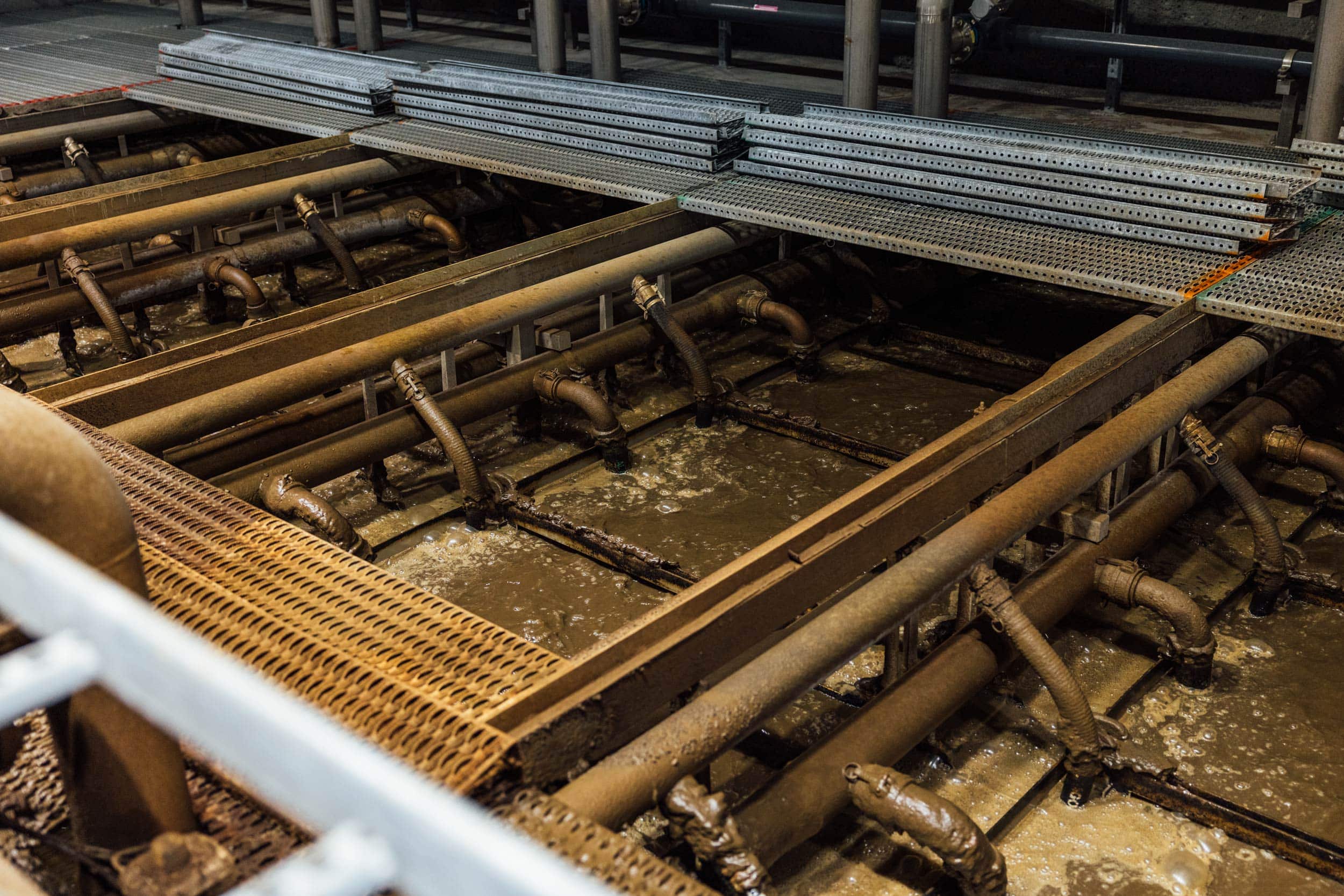
A cave system the size of six football fields was excavated for Mikkeli’s new water treatment plant. The test environment that was built next to the treatment plant is not tiny, either. The test cave can fit a full-sized lorry, and its equipment can be used to treat a sea-container’s worth of wastewater daily. In fact, Mikkeli’s test site is the largest of its kind in Finland.
The test environment is also unique in the sense that the water fractions researched there do not need to be transported separately to the site, but can be directed at any stage of the water treatment process via the plant’s cave system. If need be, the entire treatment process can be handled from start to finish right in the test cave.
The water treatment plant and its test environment form the foundation of the Blue Economy Mikkeli (BEM) international Centre of Excellence. Its mission is to enable research and product development activities related to the circular economy of municipal water, for both companies and researchers.
“From the start, it was clear that the test environment needed to be openly available, instead of being limited to any specific company,” says Project Manager Juha Kauppinen from the City of Mikkeli, who is responsible for the BEM Centre of Excellence.
The test environment is designed to serve the needs of local educational institutions and their laboratories and researchers. For example, LUT University offers a Master’s Programme in Water Technology in Mikkeli, and another vital partner is South-Eastern Finland University of Applied Sciences (Xamk).
Ensuring success with an effective business partnership
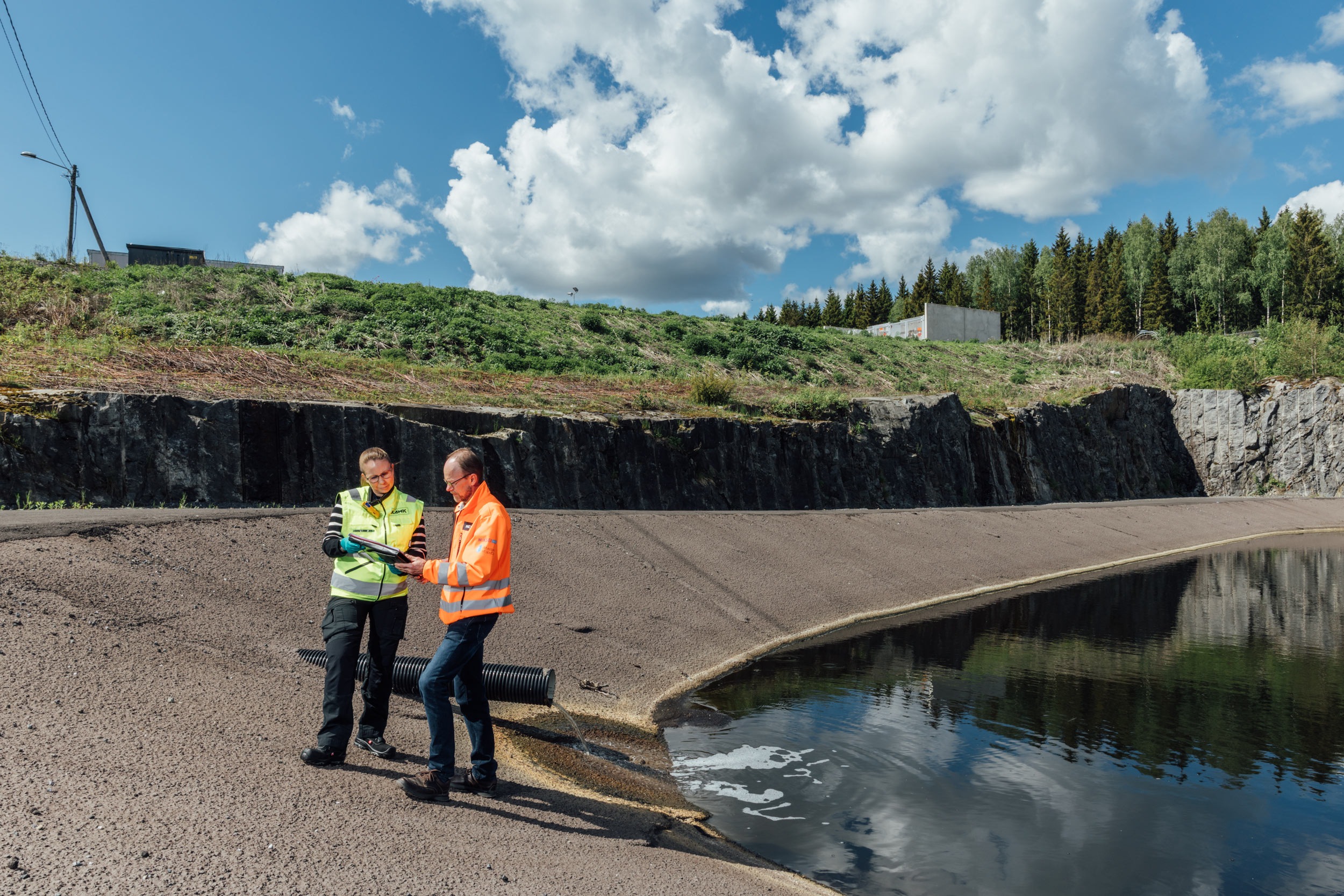
A key part of the success of Mikkeli’s infrastructure reform was the Operon Group, which offers operational services for water treatment plants. Operon not only helped design the innovative test environment, but it also runs Mikkeli’s water treatment plant.
Operon’s role as Mikkeli’s partner is twofold: it serves as both a regular subcontractor and development partner that also offers its services to other companies.
“Our goal is to involve other companies in the test environment’s activities. At the same time, we also monitor the needs of local water users,” says Business Development Manager Jussi Mikkola from Operon.
At first, the city struggled with the idea that it would not be solely responsible for the operation of its new water utility.
“Local residents thought that bringing in an external business partner would result in the sale of our water, water utility, and half of the city. However, this is not the case, as all of these still belong to the city. Fortunately, we’ve been able to convince people that this can be a win-win scenario for everyone. Operon has provided us with their stellar expertise in the treatment plant’s development as well as a genuinely business-oriented perspective for running our test environment,” notes Juha Kauppinen.
“The fact that we’re responsible for operating the plant does not mean that we have the power to charge people for their water or anything like that. Our long-term goal is to provide local residents with more affordable water compared to what they would pay if we weren’t here to help,” Mikkola adds.
Solutions to global problems, from freshwater shortages to food security
The lack of clean water is a global trend that also affects Europe, and it has become increasingly topical as a result of climate change, urbanisation, and salinisation. Both people and industry are competing for the same water resources.
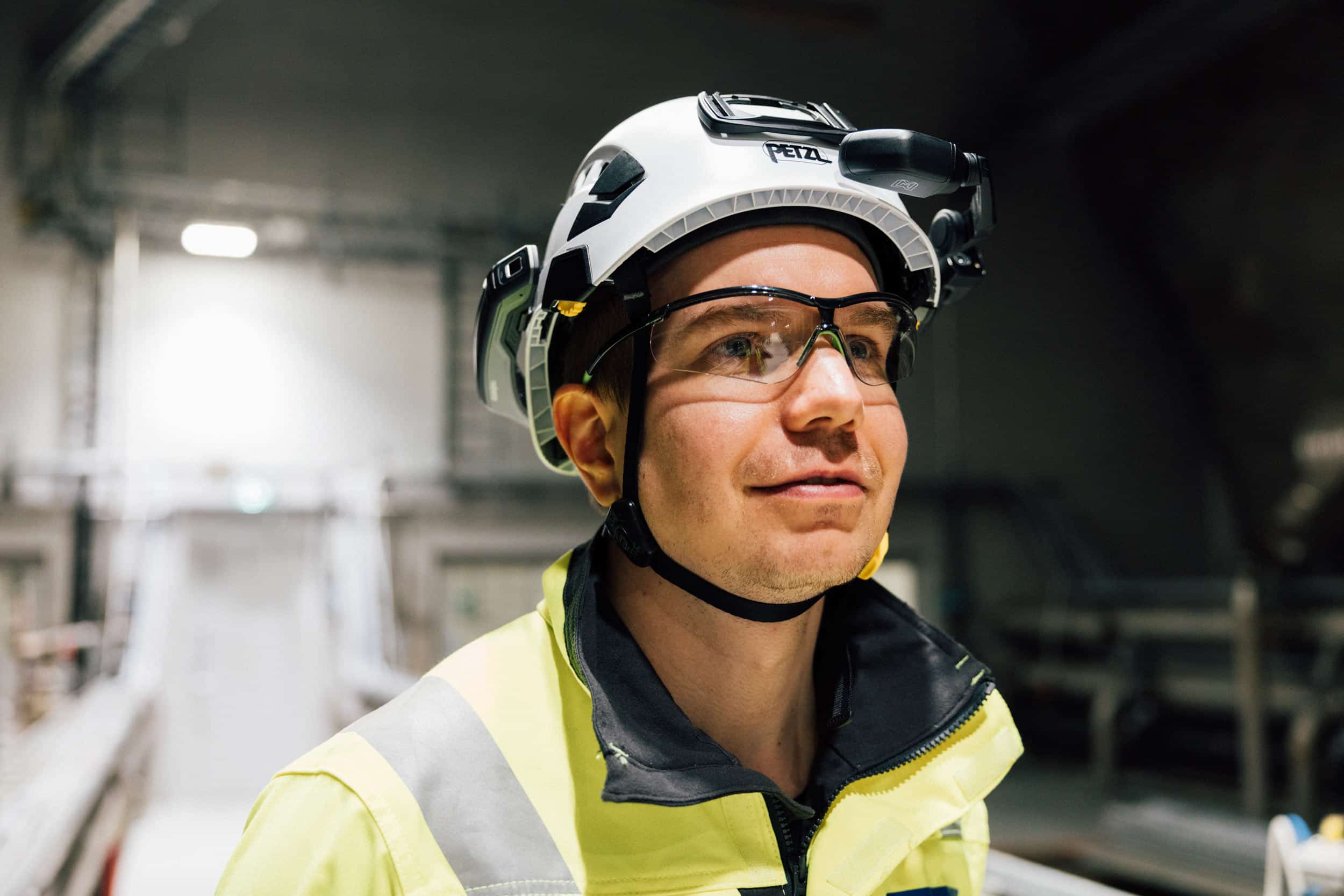
Even Finnish companies use domestic water for processes that do not require potable-quality water. This is where reclaimed water could provide a suitable solution.
“We’re facing a world where scarce water resources will demand equitable distribution to prevent future conflicts. It’s only fair that we provide people with the cleanest water, while industry can make do with reclaimed wastewater,” Reijo Turkki explains.
Mikkeli’s new water treatment plant has above-ground pipelines in place for the day when the reclaimed water produced by the plant can be directed for industrial use. The City of Mikkeli is planning several industrial areas right nearby the water treatment plant. And once the plant is able to circulate reclaimed water, the city will be able to conserve its groundwater resources.
In the future, reclaimed water could perhaps be used to improve food security and boost food production through the inclusion of additional nutrients. According to Turkki, these new types of water products could be used in a multitude of other areas, such as maintaining the right level of soil carbon reserves and sequestering more carbon into the soil.
On a global scale, wastewaters represent a veritable treasure trove of nutrients and other valuable substances, such as nitrogen and phosphorus, in addition to the water itself. Mikkeli’s new test environment can be used to develop new solutions for the recovery and re-use of these materials.
Mikkeli, the capital of clean water – both today and especially in the future
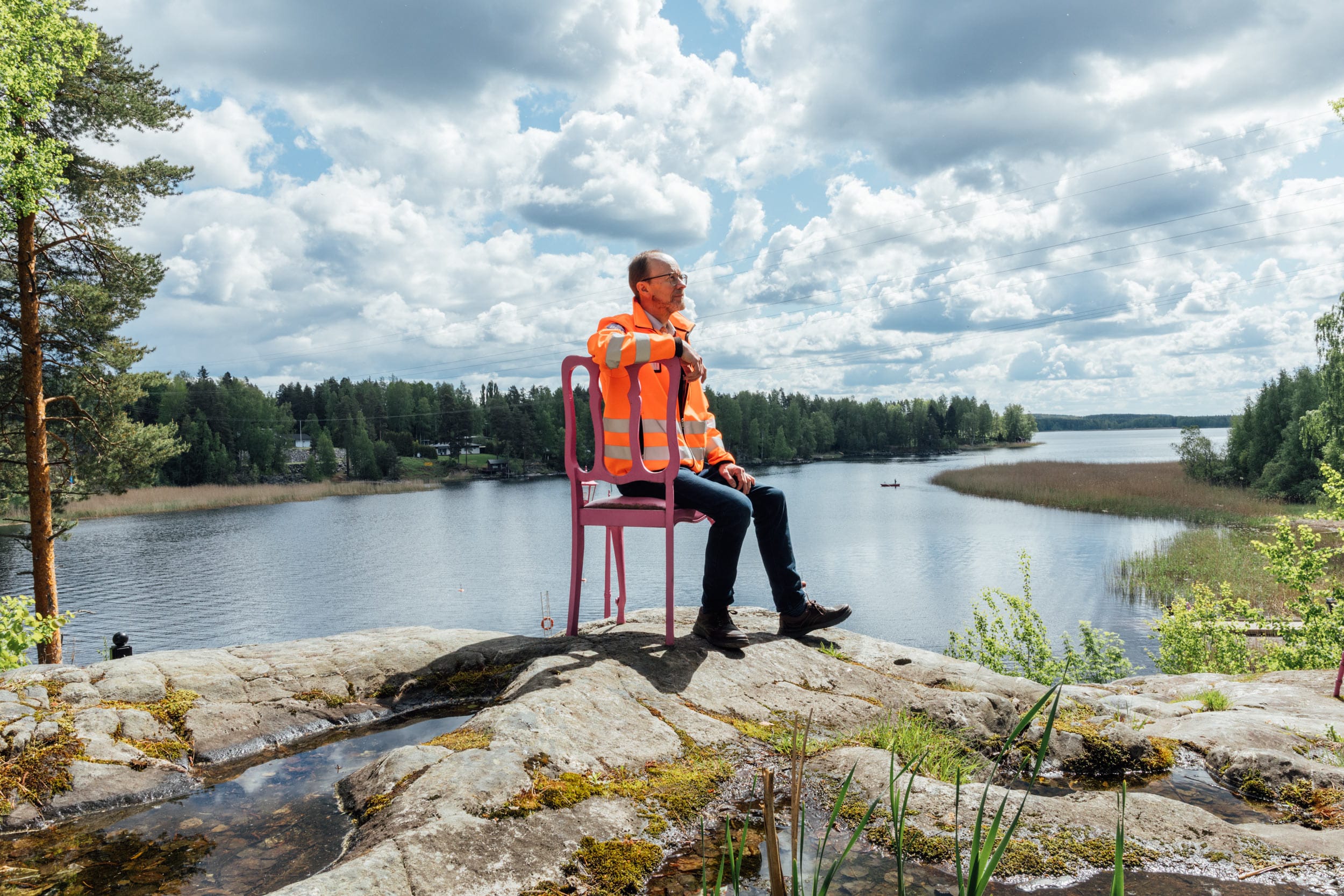
Mikkeli’s city strategy states that Mikkeli is the capital of clean water, and this belief encapsulates Mikkeli’s entire future as a pioneering city.
“It’s an important idea – what if we could show our younger residents that Mikkeli is an innovative city that focuses on nationally and internationally important research?” explains Reijo Turkki.
Mikkeli has gained national visibility and credibility through its new infrastructure reform. However, Mikkeli has also drawn the attention of international audiences and been able to access EU funding. Around 600 people from around the world visit the water treatment plant every year, and the solutions to future water problems have attracted widespread interest.
Mikkeli’s example demonstrates how a routine infrastructure renewal project can be used to solve global problems. The longer-term impacts of its efforts are set to materialise over time.
Mikkeli is also flowing with events as the city prepares to host the second Mikkeli Water Week in autumn 2025. This week-long event highlights the significance and potential of clean water.
“Our vision is to make Mikkeli a pioneering city in clean and safe water solutions and circular economy practices. We want to serve as a model for others, both in Finland and across the globe, and we will continue to hone our leading-edge approach,” Juha Kauppinen concludes.
Mikkeli is part of the InnoCities network. The city is spearheading its development approach with the circular economy of municipal waters, which it promotes with the Blue Economy Mikkeli (BEM) Centre of Excellence.



